

Höre diesen Podcast kostenlos in der App: Kostenlos im App Store laden
radio.at
Sleeptimer
Sender speichern
106 Episoden
Episode 84: Codices de Moribus Scientificis - II
19.09.2026 | 59 Min.In this two-part episode, we examine scientific codes of conduct, using the Netherlands Code of Conduct for Research Integrity as our primary example. We discuss why such codes are necessary, where their guiding principles come from, and how (and whether) they are enforced. We also discuss many of the standards of good research practice derived from said principles.Episode 83: Codices de Moribus Scientificis - I
04.09.2026 | 49 Min.In this two-part episode, we examine scientific codes of conduct, using the Netherlands Code of Conduct for Research Integrity as our primary example. We discuss why such codes are necessary, where their guiding principles come from, and how (and whether) they are enforced.Episode 82: Scientia: Nova Aetas Aurea
14.08.2026 | 1 Std. 15 Min.In this episode, we will reflect on how governments should support science, from the 1945 policy report Science: The Endless Frontier by Vannevar Bush, and then move on to the recent policy document by the Trump Administration 'Science: A New Golden Age'. We reflect on what we like about the policy report and what we like less. Is the linear model from basic research to application indeed outdated? Are metascience units a good idea? And will AI accelerate and radically transform how we do science? Enjoy.
Shownotes:
Bush, Vannevar. (1945). Science The Endless Frontier. http://archive.org/details/in.ernet.dli.2015.212068
Bush, Vannevar. (1970). Pieces of the action. New York, Morrow. http://archive.org/details/piecesofaction00bush
Science: A Golden Age https://www.whitehouse.gov/wp-content/uploads/2026/07/Science-A-New-Golden-Age.pdfEpisode 81: Analysis Multiversi
31.07.2026 | 1 Std. 7 Min.In this episode, we will discuss multiverse analysis–what it is, why we use it, and how we should use it. We also discuss many analyst projects, and Daniel's new preprint on multiverse analysis.
Shownotes
Auspurg, K. (2025). Robustness is better assessed with a few thoughtful models than with billions of regressions. Proceedings of the National Academy of Sciences, 122(43), e2521917122.
Chamberlin, T. C. (1890). The method of multiple working hypotheses. Science, (366), 92–96.
Dochtermann, N. A., & Jenkins, S. H. (2011). Developing multiple hypotheses in behavioral ecology. Behavioral Ecology and Sociobiology, 65(1), 37–45.
Dreber, A., & Johannesson, M. (2025). The credibility gap: Evaluating and improving empirical research in the social sciences. Routledge.
Gelman, A., & Loken, E. (2013). The garden of forking paths: Why multiple comparisons can be a problem, even when there is no “fishing expedition” or “p-hacking” and the research hypothesis was posited ahead of time. Department of Statistics, Columbia University, 348(1-17), 3.
Knief, U., & Forstmeier, W. (2025). Are our 95% CIs only worth 45% confidence? bioRxiv, 2025-08.
Lakens, D., Rasti, S., & Tunç, M. N. (2026). There is only one correct analysis. (Preprint)
Platt, J. R. (1964). Strong Inference: Certain systematic methods of scientific thinking may produce much more rapid progress than others. Science, 146(3642), 347–353.
Simonsohn, U., Simmons, J. P., & Nelson, L. D. (2020). Specification curve analysis. Nature Human Behaviour, 4(11), 1208–1214.
Steegen, S., Tuerlinckx, F., Gelman, A., & Vanpaemel, W. (2016). Increasing transparency through a multiverse analysis. Perspectives on Psychological Science, 11(5), 702–712.
Wimsatt, W. C. (2007). Re-engineering philosophy for limited beings: Piecewise approximations to reality. Harvard University Press.Episode 80: Intelligentia Artificialis
17.07.2026 | 1 Std. 10 Min.After a short break due to busy calendars, we are back to discuss the role automation and artificial intelligence can play in science. Is AI evil, or does it just amplify the problems that were already present in science? Can automated AI driven checks help scientists to improve the way they work? If so, where are these tools helpful, and when? Enjoy.
The Babbage quote is from Babbage in November 1839, recalling events in 1821; quoted in Harry Wilmot Buxton and Anthony Hyman (1988), Memoir of the Life and Labours of the Late Charles Babbage.
Alfred Whitehead: An Introduction to Mathematics (1911)
Blog about AI references: Evaluating Dr. Cuddy’s Claim that the Debunking of Power Posing is a Myth. https://daniellakens.blogspot.com/2026/05/evaluating-dr-cuddys-claim-that.html
Metacheck: DeBruine L, Mesquida C, Werner J, Lakens D (2026). metacheck: Check Research Outputs for Best Practices. doi:10.5281/zenodo.20704754, R package version 0.1.0, https://scienceverse.org/metacheck
Cummins, J., Clarke, B., Hussey, I., & Elson, M. (2026). RegCheck: A tool for structured comparisons between study registrations and papers (arXiv:2601.13330). arXiv. https://doi.org/10.48550/arXiv.2601.13330
Weitere Wissenschaft Podcasts
 Ö1 RadiokollegBildung, Musik, Musikgeschichte, Wissenschaft
 Ö1 Wissen aktuellGeowissenschaften, Naturwissenschaften, Sozialwissenschaften, Wissenschaft
 Wissen WeeklyBildung, Wissenschaft
 Aha! Zehn Minuten Alltags-WissenBildung, Gesundheit und Fitness, Wissenschaft
 IQ - Wissenschaft und ForschungWissenschaft
 RadiowissenWissenschaft
 Der KI-PodcastWissenschaft
 ZEIT WISSEN. Woher weißt Du das?Bildung, Gesellschaft und Kultur, Wissenschaft
 Das Wissen | SWRWissenschaft
 Rätsel des Unbewußten. Psychoanalyse & Psychotherapie.Gesellschaft und Kultur, Gesundheit und Fitness, Mentale Gesundheit, Wissenschaft
Trending Wissenschaft Podcasts
 Systemsprenger: Der PodcastBildung, Kinder und Familie, Sozialwissenschaften, Wissenschaft
 Arbeits- und OrganisationspsychologieBildung, Sozialwissenschaften, Wirtschaft, Wissenschaft
 The Joy of WhyBiowissenschaften, Wissenschaft
 Der Podcast zur Energie. Zukunft.Gesellschaft und Kultur, Nachrichten, Natur, Naturwissenschaften, Regierung, Tech-News, Wirtschaft, Wissenschaft
 Robinson's PodcastNaturwissenschaften, Wissenschaft
 From First PrinciplesWissenschaft
 SRF WissenWissenschaft
 1000 AntwortenGesellschaft und Kultur, Wissenschaft
 Geladen - der Batteriepodcast zur EnergiewendeBildung, Chemie, Nachrichten, Tech-News, Technologie, Wissenschaft
 Почему мы еще живыBildung, Wissenschaft
 Hidden BrainDarstellende Kunst, Kunst, Sozialwissenschaften, Wissenschaft
 Babbage from The EconomistNachrichten, Tech-News, Technologie, Wissenschaft
 Astrum SpaceAstronomie, Wissenschaft
 Boring History for SleepSozialwissenschaften, Wissenschaft
 SternzeitWissenschaft
 RaumzeitTechnologie, Wissenschaft
 Recht hören. Der ecolex-PodcastSozialwissenschaften, Wissenschaft
 Science ArenaGesellschaft und Kultur, Wissenschaft
 tierisch! – Eine Reise in die wilde Welt der Tiere mit der Wildtierbiologin Frauke FischerGesellschaft und Kultur, Natur, Reisen und Orte, Wissenschaft
 AT.reloadedBildung, Wissenschaft
 Zukunftsfragen - Der Horx & Horx PodcastSozialwissenschaften, Wissenschaft
 Mission Energiewende – Der Klima-PodcastGeowissenschaften, Gesellschaft und Kultur, Natur, Regierung, Technologie, Wissenschaft
 Forschung aktuellWissenschaft
 MOUNT ERBRECHTWissenschaft
 FocusGesellschaft und Kultur, Philosophie, Wissenschaft
Über Nullius in Verba
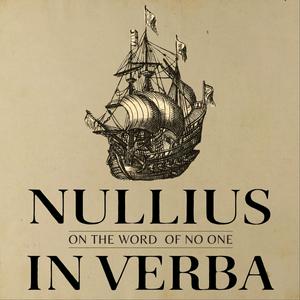
Nullius in Verba is a podcast about science—what it is and what it could be. It is hosted by Smriti Mehta from UC Berkeley and Daniël Lakens from Eindhoven University of Technology. Our logo is an homage to the title page of Novum Organum, which depicts a galleon passing between the mythical Pillars of Hercules on either side of the Strait of Gibraltar. The title of the podcast comes from the motto of the Royal Society, set in typeface Kepler by Robert Slimbach. Our theme song is Newton’s Cradle by Grandbrothers.
Podcast-WebsiteHöre Nullius in Verba, Ö1 Radiokolleg und viele andere Podcasts aus aller Welt mit der radio.at-App
Hol dir die kostenlose radio.at App
- Sender und Podcasts favorisieren
- Streamen via Wifi oder Bluetooth
- Unterstützt Carplay & Android Auto
- viele weitere App Funktionen
Hol dir die kostenlose radio.at App
- Sender und Podcasts favorisieren
- Streamen via Wifi oder Bluetooth
- Unterstützt Carplay & Android Auto
- viele weitere App Funktionen

Nullius in Verba
Code scannen,
App laden,
loshören.
App laden,
loshören.
 Österreich